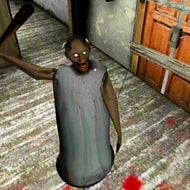
Toca Boo looks like a light, spooky-cute haunt-the-house game from the thumbnail, but it plays like a frantic one-versus-many stakeout where a single missed scare can end the run. You’re a ghost defending your own house, and every visitor who reaches the front door with a signed offer in hand means the house — and the game — is over.
| Genre |
Horror Survival |
| Main Character |
The house ghost |
| Core Mechanic |
Scaring buyers away before they complete a purchase |
| Controls |
Hold to move, release to reposition |
| Loss Condition |
A buyer reaches the door and closes the sale |
The Buyers Toca Boo Sends Through the Front Door
The premise sounds almost gentle until the first buyer walks in and refuses to leave after one scare. Toca Boo doesn’t give visitors a scripted path through the house — they wander, backtrack, and sometimes split toward different rooms, so camping near the front door doesn’t work.
New players usually lose their first few runs by chasing whichever buyer is closest instead of tracking who’s closest to finishing their tour. A buyer who’s already inspected most of the house is far more dangerous than one who just walked in.
That distinction — proximity to you versus proximity to buying — is the whole difficulty curve compressed into one decision players relearn every run.
Reading a Buyer’s Vision Range Before It’s Too Late
Every buyer has a vision range, and getting caught inside it before committing to a scare tends to backfire — spotted too early, a buyer just walks off instead of getting frightened away entirely. The game rewards patience over speed: closing the gap from an angle a buyer isn’t watching beats a straight-line rush.
There’s no long warm-up period, so a wasted approach early in a run can cost you the room you needed to control later.
A second layer becomes obvious once you’ve read a few vision cones correctly: a buyer scared twice bolts for the exit faster than one experiencing it for the first time.
The Swinging Fixture and Getting Caught Underground
The house itself isn’t just a backdrop. A swinging light fixture can catch you off guard mid-chase, and players frequently mention getting trapped underground in the basement layout, where tighter corridors make it harder to loop back around a buyer who’s cornered you.
Comments on the game’s page repeatedly flag the swinging fixture as a hazard worth learning early, since it can interrupt your own scare attempt, not just the buyer’s path.
A typical run in Toca Boo tends to escalate in a fairly consistent shape once you’ve played a handful of times:
- A buyer or two enters and explores the ground floor while you scout their vision range from a distance.
- You commit to a first scare from an angle they aren’t watching, sending them retreating toward an exit.
- A second, more confident buyer pushes further into the house, often toward the basement or a back room.
- The run either ends in a defeat screen the moment someone reaches the door, or it closes out once every buyer has been driven off for good.
That basement stretch is where veteran players say the real skill check happens, since a wrong turn there costs far more time than the same mistake upstairs.
Why Toca Boo’s Short Length Doesn’t Make It Easy
Because a full session rarely runs long, there’s little room to recover from an early misread. Losing track of one buyer for a few seconds can mean the difference between a clean run and a defeat screen.
Community reaction has leaned positive, with players calling the ending genuinely satisfying once every visitor has been driven off without a single sale going through.
The honest trade-off is scope: there isn’t a deep upgrade system layered on top of the core loop, and some players wanted more content after clearing their first successful run.
- How do you actually scare a buyer away in Toca Boo? Approach from outside their current vision range and commit to a scare once you’re close. Spotted too early, a buyer just walks off instead of fleeing for good, so the angle of approach matters as much as the timing.
- What happens if a buyer reaches the front door? The sale goes through and the run ends immediately in a defeat screen. That’s why tracking the buyer closest to finishing their walkthrough matters more than tracking whichever one happens to be nearest to you.
- Is the basement worth avoiding in Toca Boo? Not avoiding, but respecting — its tight layout and the swinging fixture make it easy to get boxed in. Most experienced players clear upstairs buyers first before chasing anyone downstairs into that tighter space.
Toca Boo earns its tension from how little room for error it gives — one careless approach near the swinging fixture or one buyer left unwatched near the basement stairs, and a run that looked under control falls apart in seconds.