You click on the chalkboard bolted to a shack wall behind the schoolyard, take the pencil that falls into your hand, and use it to scratch a name onto an egg you were told never to touch. Nothing on screen explains why any of this matters. Tiny Bunny opens on that quiet, unsettling gesture and keeps building meaning out of small objects like this one — a pencil, an egg, a shard of chalk — until you realize the game has been teaching you its own private language since the very first click.
| Genre |
Point-and-click adventure with puzzle and narrative elements |
| Visual style |
Hand-drawn black-and-white artwork throughout |
| Playable content |
Chapter I, the opening part of a longer story |
| Core cast |
Désiré, David, Bruno, Elodie, Damien |
| Typical session |
Roughly 45 to 90 minutes to finish the chapter |
Désiré’s Black-and-White World
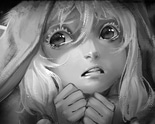
Everything you see in Tiny Bunny is filtered through Désiré, a boy who has been colour-blind since birth and only perceives the world in shades of grey. When a schoolteacher asks why he didn’t draw the sun like the other children, his answer sets the tone for everything that follows: it’s always night in his head. That single line does more world-building than any tutorial box, telling you exactly what kind of game this is — one where the visuals are a symptom of the character, not a style layered on top.
Mechanically this is a traditional point-and-click: you move Désiré across static scenes, click hotspots, collect objects into an inventory, and combine them to progress. There’s no combat and no timer. Progress instead depends on noticing details — a loose chalkboard, a half-open drawer, a look someone gives you a beat too long.
The story unfolds in life stages rather than straightforward chapters, starting in childhood and pushing forward through the years that shape him. Underneath the puzzles sits a quieter thread about a consumer-driven adult world closing in on a kid who already sees things differently, and that thread keeps the game from ever feeling like a simple puzzle box.
The Egg, the Pencil, and a Name No One Should Read
- A pencil taken from the schoolyard chalkboard
- An egg you’re instructed to keep hidden
- A small wooden box meant to store what you’ve written
The opening puzzle has you writing a name onto the egg with that pencil, then finding somewhere safe to keep it — childhood ritual logic that only clicks once you’ve examined every object in the shack twice. It’s a fair introduction to how Tiny Bunny expects you to think: literally and a little superstitiously.
David and the Schoolyard Reckoning
David is the bully who shadows Désiré through the schoolyard scenes, written with more nuance than the label suggests. Conversations with him branch depending on what you’ve picked up and who you’ve already spoken to, so two players can walk away having seen different exchanges.
What makes the David scenes land is that the game never frames him as an obstacle to defeat. He’s a pressure the story applies to Désiré at an age when pressure like that leaves a mark, and the puzzles built around him are less about solving a problem and more about deciding how Désiré responds to one.
Players expecting a horror game with jump scares tend to be thrown by this section, because the tension here is entirely social — one of the clearest examples of Tiny Bunny using adventure-game structure to tell a story about growing up rather than surviving something monstrous.
Bruno’s Silence Between Chapters
Bruno, Désiré’s older brother, appears more sparingly — a physically imposing figure who’d rather be left alone with a book than deal with schoolyard politics. He doesn’t get much dialogue, but the contrast between his stillness and David’s aggression does quiet character work without a single extra puzzle attached.
Tiny Bunny’s Puzzles That Refuse to Hold Your Hand
User reviews for the game sit at roughly two-thirds positive, and the negative third almost always cites the same thing: puzzle logic that occasionally leaps from clever to confusing. Most early puzzles resolve cleanly once a scene is combed properly, but a handful lean on dream logic and symbolic connections that reward lateral thinking.
That divide is worth knowing going in. Players who enjoy pixel-hunting and re-examining every hotspot tend to describe the difficulty as fair; players expecting conventional adventure-game signposting sometimes bounce off the same puzzle for twenty minutes before checking a walkthrough.
None of this makes the puzzles unfair, just unwilling to compromise. A rough approximation of how most players work through the shack sequence looks like this, even if the order can shift:
- Examine every object in the current scene, including ones that don’t look interactive
- Open the inventory and try combining anything that seems thematically linked
- Return to a character you’ve already spoken to once a new item is in hand
- Revisit the scene itself, since some hotspots only appear after a specific action
Elodie and the Moments Color Breaks Through
Elodie is one of the characters who genuinely shifts Désiré’s vision, and the scenes built around her are where the black-and-white palette gets tested rather than simply maintained. Nothing is explained outright when it happens; the shift itself is the storytelling, and it’s the kind of detail you only fully register once you’ve been staring at grey scenery for long enough to notice the difference.
Damien and the Weight of Growing Up
Damien enters later in the chapter as Désiré gets older, marking a clear tonal shift away from the schoolyard stakes of the earlier sequences. By the time Damien appears, the game has stopped being about surviving childhood and started being about the compromises that follow it.
An older man also drifts through this stretch of the story, offering a perspective on Désiré’s situation that neither David nor Bruno could give. He isn’t given the same weight as the named cast, but his presence signals Chapter I is building toward something the rest of the series pays off.
This is also where the critique of a profit-driven adult world becomes hardest to miss. Objects that once felt personal — the egg, the pencil, the box — start reappearing in contexts that feel commercial and cold.
What Tiny Bunny’s Chapter I Leaves Unresolved
Because this is only the first chapter of a longer story, the ending doesn’t resolve so much as it pauses. Désiré is left looking out at the same grey scenery he started in, older and changed but without a clean answer to what any of it meant. Some players find that frustrating; others say the ambiguity is the whole point of a story about a boy never given clean answers to begin with.
Either way, it rewards attention over speed. The details you notice in the shack, the schoolyard, and Elodie’s scenes feed into a picture that only forms once you stop treating Tiny Bunny like a puzzle to finish and start treating it like a story to sit with.
Community discussion tends to circle back to one question: whether David, Bruno, and the older man are real people in Désiré’s life or symbols of the pressures closing in on him. The game never settles it, and that ambiguity is what keeps players comparing notes once Chapter I is behind them.
Is Tiny Bunny actually scary, or just unsettling?
There are no jump scares or monsters — the discomfort comes from tone, the black-and-white art, and Désiré’s isolation rather than horror-game mechanics. Players expecting traditional scares are usually surprised by how quiet the content actually is.
How long does it take to finish the first chapter?
Most players clear Chapter I in about 45 to 90 minutes, depending on how much time they spend re-examining scenes before a puzzle clicks. A less intuitive object combination can stretch that considerably.
Does the story explain what happens with David by the end?
Chapter I closes without a tidy resolution to the David conflict, in keeping with the story’s refusal to wrap things up neatly. His arc, like several others here, is left for the reader to interpret rather than for the game to spell out.
Tiny Bunny isn’t interested in easy answers, and by the time Damien shows up near the end of Chapter I, that refusal feels less like a gap in the writing and more like the point of following Désiré this closely. It’s a short, dense first chapter that trusts you to sit with an egg, a pencil, and a boy who only sees grey.