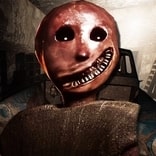
Rocky, your ghostbusting partner in The Happyhills Homicide, does not make it out of the first act — and that single moment turns what starts as a lighthearted haunted-house comedy into a revenge story players still bring up years after finishing it. This is a point-and-click case file wrapped around dry humor, cross-section houses, and a twist ending that regularly gets called one of the most memorable in the genre.
| Genre |
Point-and-Click Horror Comedy |
| Main Character |
An independent ghostbuster working solo |
| Companion |
Rocky, the canine sidekick |
| Occupation |
Paranormal cleanup, one house at a time |
| Core Mechanic |
Elevation-based point-and-click puzzle solving |
| Setting |
A series of numbered haunted houses, seen in cross-section |
Rocky and the Case That Starts It All
Every job in The Happyhills Homicide begins the same low-key way: a client calls in paranormal activity, and you head out with Rocky to check it out. Early cases feel almost mundane — placing charms in the right spots, cleaning satanic drawings off a bedroom wall — and the game leans hard into that contrast between routine pest-control energy and the genuinely unsettling things happening just off-screen.
Then a door slams shut and locks behind you, and the tone shifts for good. What happens to Rocky shortly after is the moment most players point to when they talk about this game, since it turns a job you were treating casually into something personal almost instantly.
From that point on, every new house feels less like paperwork and more like a step toward finding whatever did this, and the humor never fully disappears — it just gets sharper and a little more bitter around the edges.
Fixing the Antennae Before the First House Call
Before the first real case even starts, there’s a small fix-it task involving a broken antennae, and it’s easy to miss how much this early sequence is teaching you about the game’s interaction style. Everything here is examined and combined rather than simply clicked once and forgotten.
New players often breeze past objects that need a second look, assuming a single click is enough. The Happyhills Homicide expects you to pick things up, carry them between rooms, and use them on specific elements rather than just walking past a puzzle waiting to be solved.
That habit of re-examining a room pays off constantly later, especially once cases stop being obvious about what needs fixing and start hiding their solutions behind objects that don’t look interactive at first glance.
Reading Elevation in The Happyhills Homicide’s Cross-Section Houses
Every house is presented as a two-dimensional cross-section, and a line drops down from your cursor to show which floor or elevation your character will actually move to when you click. It’s a small visual cue, but it solves a real problem — without it, judging which level a click lands on inside a multi-floor house would be a constant guessing game.
Once you’re used to it, the elevation line becomes second nature, and most of the friction disappears. Until then, expect a few wasted clicks sending you to the wrong floor at the worst possible moment, especially in houses with basements stacked directly under attic spaces.
It’s a small detail, but it’s the kind of thing players specifically call out when recommending the game, because it quietly avoids a frustration that trips up a lot of cross-section point-and-click titles.
House 4: The Scriptures and Its Light Switch Trick
House 4, referred to in-game as the Scriptures, is the point where a lot of players get stuck — not because the puzzle is unfair, but because the solution isn’t obvious from normal interaction. The trick, as players who’ve cleared it will tell you, is to turn the light on and off multiple times rather than just once.
Skip that step and it’s easy to assume you’ve hit a dead end or a bug, when really the game is waiting for a specific repeated action most players wouldn’t think to try unprompted.
This house also marks a tonal shift within The Happyhills Homicide itself — the jokes get a little darker, the rooms feel a little less like a client’s house and a little more like a warning, and it sets up the back half of the story without spelling anything out directly.
The Bear Trap, the Hamburger, and Other Field Tools
Tool combinations are where a lot of the game’s puzzle logic lives, and a handful of specific items come up again and again across different houses:
- A bear trap, used to catch something rather than simply chase it off
- A hamburger, useful as bait when a straightforward approach won’t work
- Charms, placed in specific rooms to ward off activity
- A plug and assorted electrical fixtures, tied into more than one house’s puzzle logic
None of these tools are explained with a tutorial pop-up. The game trusts you to notice that a bear trap sitting in one room might matter three rooms later, which is exactly the kind of design choice that either clicks for a player or sends them hunting for a walkthrough.
That’s a fair trade-off for a comedy-horror point-and-click built around short, self-contained cases rather than a long, hand-held campaign.
The Proto Gun and the Turn Toward Revenge
Once the story turns personal, the tools turn more serious too. A proto gun found in a shed becomes the closest thing to a real weapon in The Happyhills Homicide, and getting to it involves a short sequence that plays very differently in tone from the charm-placing busywork earlier in the game.
A typical late-game case tends to unfold in roughly this order once the story shifts:
- Investigate the house’s cross-section for anything out of place compared to earlier, more routine calls.
- Track down and combine the specific items the house is hinting at, often requiring backtracking between floors.
- Reach the shed sequence and recover the proto gun before the final confrontation.
- Use it in the moment the game has been building toward since Rocky’s fate was revealed.
Players who went in expecting a purely comedic ghost-hunting game tend to remember this stretch the most, since it’s where The Happyhills Homicide commits fully to the revenge angle it had been hinting at from the start.
What Makes The Happyhills Homicide’s Humor Work Despite the Twist
What keeps the tonal whiplash from feeling cheap is that the comedy never fully vanishes, even after things turn dark. Client dialogue stays dry and a little absurd, and small details — like the mundane framing of a company handling literal hauntings as just another service call — keep showing up right alongside the more unsettling material.
That balance is exactly what players debate most in comment threads: some think the shift toward revenge undercuts the earlier comedic tone, while others think the contrast is what makes the twist land as hard as it does. Both reactions show up constantly, and neither side is really wrong about what they experienced.
Made in a short jam window rather than as a long-form production, the game doesn’t have room for a huge cast of houses, and a few players do wish there were more cases after the ending than there actually are.
What happens to Rocky in The Happyhills Homicide?
Without spoiling the exact moment, Rocky is seriously harmed early in the story. That single event is what pushes the previously routine ghostbusting cases into a personal revenge arc, sending you toward the proto gun and whatever is really behind the hauntings.
How do you get past House 4, the Scriptures, in The Happyhills Homicide?
The house isn’t broken if it seems stuck at that point. The solution is to flip the light switch on and off several times rather than once, which triggers the next story beat that most players miss on a first attempt.
What is the proto gun used for?
The proto gun is recovered from a shed later in the story. It becomes the tool tied directly to the final confrontation, marking the clearest shift from investigation-focused cases to the revenge plot the ending builds toward.
The Happyhills Homicide earns its reputation less from any single puzzle and more from how deliberately it lulls you into treating Rocky, the charms, and the Scriptures’ light switch as routine before pulling the floor out from under all of it.