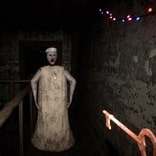
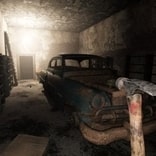
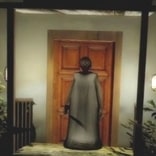
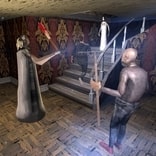
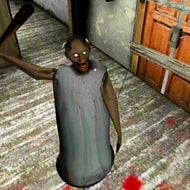
In Another Girl In The Wall you start already boxed into a tight space, and that constraint alone tells you most of what to expect before anything resembling a real threat shows up. This is a horror-survival game built around the idea its own title puts front and center — confined spaces, walls that hide more than they protect, and the sense that wherever you are right now isn’t actually safe.
What the Wall Promises Before You’ve Even Moved in Another Girl In The Wall
Games that lean this hard into a single spatial idea tend to live or die on tension rather than spectacle, and the title alone sets that expectation clearly. A wall isn’t just scenery in this kind of game — it’s the boundary between whatever’s chasing you and whatever counts as a moment of safety, and titles in this style usually make you question that boundary constantly rather than let you trust it.
Players coming into a game like this usually expect short, tense stretches rather than long open exploration, and that expectation lines up with how confined-space horror survival typically plays: a corridor, a hiding spot, and a threat you’re managing more through avoidance than confrontation.
Beyond that framing, specifics like named rooms, a fixed antagonist, or a scripted sequence of events aren’t something worth overselling before you’ve actually stepped inside. The wall is the promise the title makes, and everything else about how Another Girl In The Wall plays out is better discovered directly than dressed up in advance with details that don’t hold up once you’re actually in the corridor.
That restraint matters more than it sounds like it should. A lot of confined-space horror survival games oversell their premise with a laundry list of mechanics that turn out to be window dressing, and a title honest about leaning on one core idea — the wall itself — tends to age better than one promising a dozen systems it never quite delivers.
Tension Over Combat: What Another Girl In The Wall Leans On
The genre this game sits in generally favors avoidance mechanics over direct fights — sound management, line-of-sight breaks, and finding a gap to slip through rather than a weapon to swing. That approach tends to reward patience over reflexes, which is a divisive quality among horror-survival fans: some players find slow, deliberate movement genuinely tense, while others find it drags once the first scare has already landed.
A single playthrough in this style of game tends to run short — often wrapped up in one sitting rather than stretched across a long session — which is part of why confined, wall-based settings work as a premise at all. There isn’t room, literally, for a sprawling map.
Community discussion around games like this usually circles the same debate: whether tight, repetitive spaces build dread or just get exhausting on a second attempt. Both reactions are common, and neither one is wrong so much as a matter of what a given player wants from a short horror survival session.
Players searching out something like Another Girl In The Wall are typically after a specific mood rather than a long campaign — the kind of short, replayable dread that fits into a single sitting between longer games rather than a story meant to be finished once and set aside.
Another Girl In The Wall leans entirely on that one idea — a wall that’s never quite as solid as it looks — and whether that’s enough for a full session comes down to whether you’re the type of player who finds tension in restriction or wants more room to move than a wall-bound premise like this is ever going to give you.